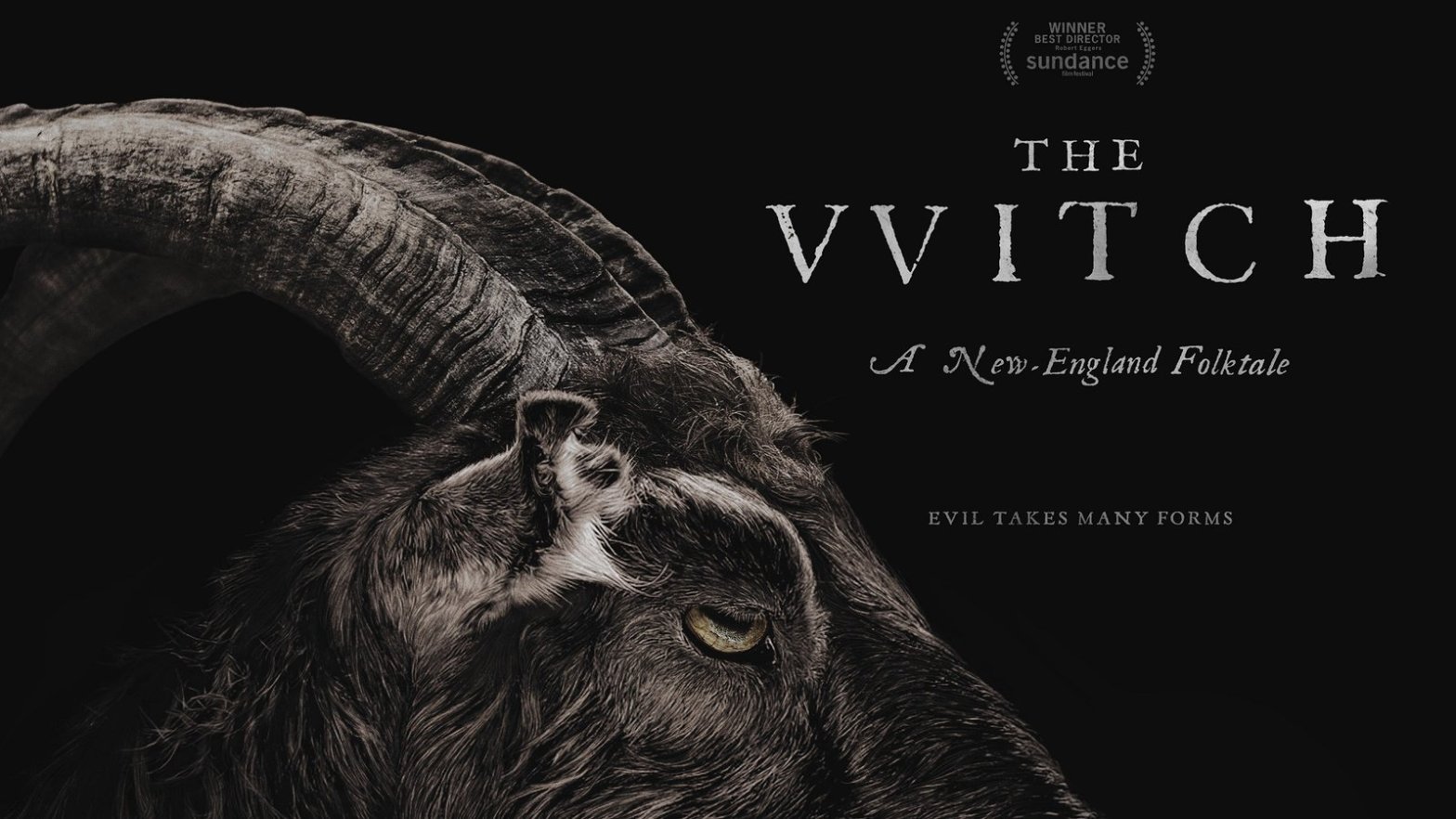
Film Facts
‘What dost thou want?.. What canst thou give? (Black Phillip and Thomasin, The Witch, 2015)
‘The Witch’ is a film about the family of William and Katherine and their children Thomasin, Caleb, Mercy and Jonas. Based around the time of the 1630’s in the state of New England, the family are banished from their Puritan colony over what appears to be religious extremism, and in turn set out to live on their own farm in the woods. The family begin to experience a number of tragic and disturbing occurrences including the disappearance of their newborn, the abduction of their son Caleb and with every passing moment the film becomes darker and the family become more and more divided. Anya Taylor-Joy is fantastic in this film and supported by both Ralph Insen and Kate Dickie who were also superb, their accent and the methodist type acting really brings forth an authenticity to the performance. The film is directed and written by Robert Eggers, his first feature film, while the music was composed by Canadian composer Mark Korven who until this film was best known for his work on the sci-fi cult classic Cube.
Track Facts
Composer
- Mark Korven
Label
- Milan Records
Award Nominations
- Central Ohio Film Critics Association – Best Score (Won)
- BloodGuts UK Horror Awards – Best Soundtrack/Score
- Fangoria Chainsaw Awards – Best Score
- Fright Meter Awards – Best Score
- International Online Cinema Awards (INOCA) – Best Original Score
Release
- 2016
The Jam
Korven designs an eerie and tense score which continues to elevate the haunting tone which the movie is based on, matching the aesthetic of the film perfectly. ‘What Went We’ begins with a tone which remains consistent throughout the entire score and sets the tone for the film right from the opening scene. Korven speaks of the influence that Penderecki’s ‘Threnody To The Victims Of Hiroshima’ (https://www.youtube.com/watch?v=Dp3BlFZWJNA) had on the score.
Korven chose to stay true to acoustic instrumentation for this score by request of Eggers to refrain from digital or synthetic sounds. The film itself is shot in a way which builds suspense, a focus on natural lighting with a grey and depressing palette, providing an authentically aged look to the film. Korven often plays off the back of many scenes which are silent, leading into particular scenes with sparse and unique sounds; We do not get classic instrumentation or harmonic and melodic development. Some unique instrumentation which serve as the focal point for this score are:
- The Waterphone
- The Hurdy Gurdy
- The Nyckelharpa & Bass Nyckelharpa
- Steel rulers
- Reverb tanks
- The Ebow
While reflecting on this choice of instrumentation, Korven states; ‘With instruments like these, the goal is to just produce sounds that in this case are disturbing.. This was a family living on the edge of survival so it shouldn’t be perfect, it needed to be a little bit flawed and fragile sounding’ (Mark Korven, Great Big Story & Indie Film & Music). The authenticity which these instruments deliver in their unique and aged timbre works hand in hand with the performances of the cast and the aesthetic of the film
Each track in this score holds the same atmosphere, it develops ideas slowly and works on increasing the dissonance and the emotion of each scene. There are string based chordal tones and percussive ostinatos throughout the score, heard in the track ‘William and Thomasin’. A medieval tune called Lachrimae (1604) was an original sketch period piece which was not used in the film but helped build the atmosphere and the tone that Eggers was looking for in this film.
‘A Witch Stole Sam’ is TFMJ’s highlight track, with its superb eeriness in its instrumentation and input from the ‘Element Choir’. The piece begins with a drone on the Nyckelharpa, developing dissonant chordal tones with various medieval instruments, eventually leading to the harrowing shrieks performed by the choir. The click clack of the percussive instruments are introduced with increased sounds from the choir, while the Nyckelharpa is continuing to move between the focal tones. As the piece reaches its end, the ever increasing crescendo moves further upward before dropping off suddenly as the Witch caresses baby Sam in her lair.
When Korven discusses this track he mentions that his original recording of the track was based solely on the Nyckelharpa, but the feedback from Eggers was that he wanted an ‘edgier’ sound, so fellow Candian Ben Grossman (known for his skills in medieval instruments) brought in an ancient Finnish instrument called the Jouhikko, giving the Witch her own ‘dissonant and disturbing voice’ (Mark Korven, Indie Film and Music). The Canadian improvising ‘Element Choir’ are brought in at the end of this track to increase the tension even further with various melodic runs and intervals which create a haunting dissonance. The choir can be heard throughout the score, most prominently in ‘ Witch’s Coven’.
Soundtrack Send-Off & Rating
Mark Korven has designed a soundtrack which focuses on Medieval and unorthodox acoustic instrumentation, matching the aesthetic of Eggars cinematography and world building perfectly. The score helps the world in ‘The Witch’ come across with authenticity and remains consistent throughout the film. The strength in this score is the atmospheric quality it brings to the story, with a focus on period, tension and an ever present eerie vibe. Korven’s score is exactly the sound and timbre this film needed for success.
Please see Mark Korven’s personal webpage here – http://www.markkorven.com/Instruments_1.html
References
The following Videos and Articles were used for additional research:
 The Slow Spin: Soundtrack Sessions