Film Facts
‘I’ve been a nobody all my life, and I won’t give it this one opportunity you can bet your life on that you just go on” (Robert Ford, The Assassination Of Jesse James By The Coward Robert Ford, 2007) ‘You’re giving me signs, to make me wonder maybe you’re minds been changed about me” (Jesse James, The Assassination Of Jesse James By The Coward Robert Ford, 2007)
This film follows an infamous outlaw of America’s wild west after the Civil War, Jesse James (Brad Pitt) at the height of the James families’ criminal activity and the man who would eventually assassinate him, Robert Ford (Casey Affleck). Ford is introduced as a young, aspiring criminal who hopes to rise through the ranks and get close to James in an effort to be seen and recognised. As the events of the film transpire, leading up to and following the assassination, the perception of hero and villain are eventually skewed, the result of which would turn the protagonist into the antagonist. Watching as Ford’s conscience pulls him and those around him in different directions, we the viewer are left to watch the characters wrestle with the consequences of their actions.
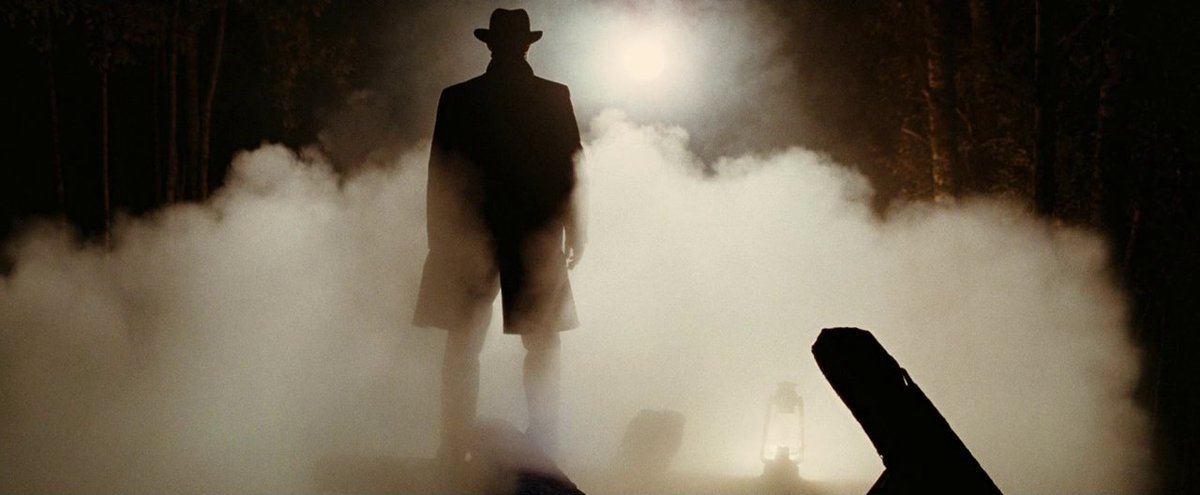
Brad Pitt and Casey Affleck are supported by a strong cast including Sam Rockwell (Charley Ford), Jeremy Renner (Wood Hite), Paul Schneider (Dick Liddil) and Same Shepard (Frank James). Brad Pitt always brings great authenticity to his roles and I personally thought Affleck was outstanding as the supporting actor, it was hard not to believe this was what Robert Ford was like as he faced the conflict within himself. The colour scheme and the particular style of filming makes this film feel unique from early on, it’s easy to see how well balanced the lighting is, as well as the slow pans and tactful zooms, expertly executed by the legendary cinematographer, Roger Deakins. Andrew Dominik directed the film and wrote the screenplay and achieved such a unique and outstanding aesthetic to this film, with the heavy use of still photography, magazine cut-outs and polaroids.
The soundtrack was composed by two band members of ‘Nick Cave and the Bad Seeds’ Nick Cave and Warren Ellis. Both Cave and Ellis had paired up to score ‘The Proposition’, which featured a fantastic score, and this was no exception. Cave and Ellis team up again to write this stunning score which is a joy to listen to throughout the film and is just as satisfying when experienced as its own entity.
Track Facts
Composers
- Nick Cave
- Warren Ellis
Label
- Mute
Award Nominations
- ACCA, Best Original Score – Nominated
- CFCA, Best Original Score – Nominated
- ICS, Best Original Score – Second Place
- INOCA, Best Original Score – Nominated
- OFTA, Best Music and Original Score – Nominated
- OFCS, Best Original Score – Nominated
- Satellite, Best Original Score – Nominated
- SLFCA, Best Score – Nominated
Release
- 2007
The Jam
This soundtrack sticks to a traditional instrumental focus, which keeps the score soft and unsuspecting, humming through the film, grinding at us as we watch the story unfold. ‘Rather Lovely Thing’ brings the shadow of sadness and depression into the film from the beginning, as Ellis and Cave design a simple motif beginning with the rolling chords played by the piano, followed by the pulse of the bass guitar and the additional layering from the violin. These instruments are eventually supported by additional string instruments and a bass drum, combining for an absolutely gorgeous track. ‘Moving On’ uses similar instrumentation but harmonically shifts in it’s pizzicato arpeggiated pattern, while the violin and piano move around this ostinato. With such an effective use of harmony and instrumentation, Cave and Ellis maintain a lovely consistency from the first track to the last in this record.
The consistency of this soundtrack is reflected in the process as Nick Cave says, “We actually did the music for the Jesse James film before the film was made. We were raring to go with it. And we made the music so we could gauge where we could go with music and where we could not go with music. We recorded twenty pieces of music and sent that to Andrew and the main piece of music comes from that; it is the thing we recorded in a single Brighton session. And that was a way for Andrew, instead of speaking in abstract terms about music and about melancholy, to say: “That bit is good and that bit I don’t like.” (Nick Cave, The Guardian, 2007)
Each track maintains a sombre emotional focus, as the everlasting cloud of tension and anxiety continues to linger all the way through the film. The piano, the strings, the bass guitar, electric guitar and bass drum remain the centre of this entire soundtrack, minimal instruments with major effectiveness. ‘Song For Jesse’ brings in a Xylophone and various tuned percussion in repeating arpeggios, opening the harmonic range but keeping the tone focussed, juxtaposed to ‘Cowgirl’ which offers a classic western vibe, also remaining centered on the core instrumentation. ‘The Money Train’ and ‘Last Ride Back To KC’ shift the focus from the piano to the string instrument, diving deeping into a darker place of emotion, as its energy grabs you and pulls you down into this space, before moving into ‘What Happens Next’ which takes a harmonic turn in a more focussed approach as the climax approaches. Tragedy is at hand, everywhere and always, this is the single most consistent feeling that runs through this score, with minimalistic instrumentation, it’s truly astonishing how consistent yet appropriate this score is. With every action Jesse or Robert take in this film, it’s surrounded by a score which engulfs the characters in regret, confusion and ultimately a dark cloud of depression. The characters are trapped in this score, with a plot which weaves within the space between the tracks.
- TFMJ – Pick Of The Score
‘Last Ride Back To KC’ is TFMJ’s pick. ‘Last Ride To KC’ begins with a mid-ranged drone on the string instruments, setting up a melancholy atmosphere for the bass strings. We are teased with the slightest sound of a bass clarinet, softly supporting the melody, taking the lead in offering such a warm yet isolated emotion. The opening to this track is deeply immersive, and offers listeners a chance for reflection and meditation separate to its purpose for the film. In the final third of this track the Marimba/Xylophone, Glockenspiel and additional string instruments are added to a melodic shape, pushing the track along slowly. This allows the melody to explore the wide space present in this piece, opening up the harmonic range as the piece slowly gathers itself together and walks steadily to the end of the track.
Soundtrack Send-Off ONE
‘The Assassination Of Jesse James By The Coward Robert Ford’ soundtrack offers a consistency so rare in film scores that it should be praised just for that. What makes this score even more special and unique (for a Hollywood film) is it’s minimal use of classic instrumentation and its power in dictating the emotion of the film from scene to scene. There is nothing more I can say to finish, but to simply congratulate Nick Cave, Warren Ellis and Andrew Dominik on what was a superb balance between the score and the visual aesthetic, a prime example of professional collaboration and what can come from a shared vision, generating an aurally and visually stunning product from start to finish.
References

