Film Facts
“Everybody just yells and screams at each other. Nobody’s civil anymore! Nobody thinks what it’s like to be the other guy, to be somebody but themselves. They don’t.” (Arthur Fleck, Joker, 2019).
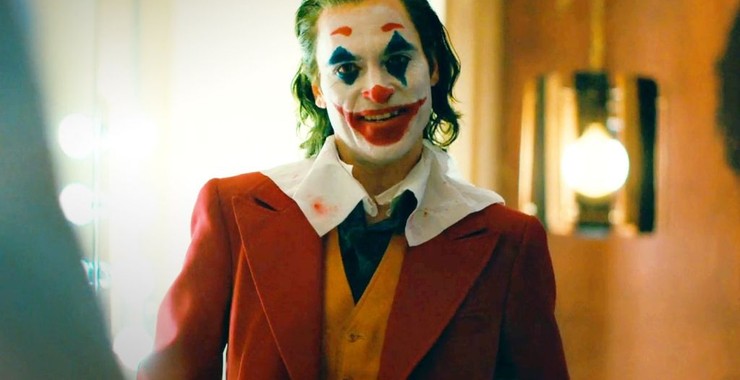
Joker (2019) serves as the backstory of the notorious arch enemy of Batman, Joker. Arthur Fleck (Joaquin Phoenix) is an average working class man in difficult circumstances who is constantly pushed to the back of society and trodden on, treated like less than a human being. It is this continuous treatment which drives Arthur to a breaking point and in doing so, he discovers his alter-ego. A clown-faced criminal power figure that embodies Arthur with comfort, control and ultimately, power, as he eventually gives in to the madness within.
This film provides an insight into the sufferings of people in society, making this film a relevant topic of conversation on mental health as well as a prominent DC film. It forced audiences to feel a very real pain in an entirely fictional narrative, based on a well-known DC Comic villain. The film does a fantastic job in drawing the viewer into Arthur’s suffering, allowing the audience to empathise with him and accepting the way he responds to ongoing abuse and the negative circumstances that make up the entirety of his life, almost justifying the violent atrocities that follow.
It truly is an amazing experience watching this film; from the beginning to end, we really get behind Arthur even as he descends further and further into madness. So much so, it has demanded the attention of the Academy Award committee, eventually rising to the top of film accolades for the year. This DC film expansion transcends all of which we have come to understand about the 21st century comic book cinematic universes.
Joker is directed by Todd Phillips, well known for his work on ‘The Hangover’ and written by both Phillips and Scott Silver. Joaquin Phoenix stars as the protagonist Arthur Fleck or ‘Joker’, supported by Robert De Niro (Murray Franklin), Zazie Beetz (Sophie Dumond) and Frances Conroy (Penny Fleck). It’s a tight-knit, talented cast where most of the story is unfolding in Arthur’s mind, with Phoenix doing the heavy lifting in a stellar performance, ultimately winning him ‘Best Actor’ for 2020.
The soundtrack was written by Icelandic composer Hildur Guonadottir, known for her work on the film Sicario: Day Of The Soldado and most notably the HBO miniseries Chernobyl. Guonadottir’s work on Chernobyl was absolutely fantastic, offering such a dark and immersive score drawing listeners into the world of the story, and the Joker offers the same aesthetic. Gudnadottir is a trained cellist, and focusses the score around her well known string family with her superb ability to get inside the mind of the Joker and completely control the emotional landscape of the film. Guonadottir became the first solo female artist to win both the Golden Globe and the Grammy Award for ‘Best Original Score’.
Track Facts
Composer
- Hildur Guonadottir
Label
- Watertower Music
Award Nominations
- Academy Awards – Best Achievement in Music Written For Motion Pictures (Won)
- BAFTA – Original Music (Won)
- ACCA – Best Original Score (Nominated)
- Blogos de Oro – Best Original Score (Winner)
- BMI Film & TVAwards
- – Film Music Award (Won)
- – Special Recognition (Won)
- Broadcast Film Critics Association Awards – Best Score (Won)
- CinEuphoria – Best Original Music (Nominee)
- Columbus Film Critics Association – Best Score (Nominee)
- Denver Film Critics Society – Best Original Score (Won)
- Discussing Film Critics Awards – Best Original Score (Nominee)
- Florida Film Critics Circle Awards – Best Score (Nominee)
- Georgia Film Critics Association – Best Original Score (Nominee)
- Gold Derby Awards – Original Score (Won)
- Gold Derby Awards – Best Original Score Of The Decade (Nominee)
- Golden Globes – Best Original Score (Won)
- Grammy Awards – Best Score Soundtrack For Visual Media (Won)
- HFCS – Best Original Score (Nominee)
- HCA – Best Score (Won)
- HMMA – Best Original Score (Won)
- HFCS – Best Original (Nominee)
- IFJA – Best Musical Score (Nominee)
- IFMCA – Best Original Score (Nominee)
- IFMCA – Film Score Of The Year
- Best Original Score For Drama Film
- Film Music COmposition Of The Year
- Film Composer Of The Year
- INOCA – Best Original Score (Nominee)
- INOCA – Best Original Score (Nominee)
- Las Vegas Film Critics Society Awards – Best Score (Won)
- LEJA – Best Music – Nominee)
- MCFCA – Best Score (Won)
- NDFS – Best Original Score (Won)
- Odyssey Awards – Best Score/Soundtrack (Won)
- OFCC – Best Score (Nominee)
- OFTA – Best Music, Original Score (Nominee)
- OFCS – Best Original Score (Nominee)
- PCC – Best Score (Won)
- Reel Music Award – Overall Score Of The Year (Won)
- Best Original Score For A Drama Feature
- SFBAFCC – Best Original Score (Nominee)
- Satellite Awards – Best Original Score (Won)
- SCL Awards – Outstanding Original Score For A Studio Film
- Venice Film Festival, Soundtrack Stars Award – Best Soundtrack (Won)
- WAFCA Awards – Best Original Score (Nominee)
- World Soundtrack Award – Film Composer Of The Year (Won)
Release
- 2019
The JamStrings, strings, strings. This may well be one of the single greatest showcases of the string family, and the intimate relationship a cellist Guonadottir has with these instruments. This entire score is not solely focused on the string family, rather it uses this ensemble at the centrepoint and boy, do we feel each note. It may be difficult to hear, but an entire Orchestra was at hand for this score; only as the film reaches its highest heights do we hear the orchestra rise to surface, Guonadottir’s explains: “Toward the beginning of the film, the orchestra is hardly audible, hiding behind the cello, in the same way that Arthur has hidden from himself for most of his life, burying his anger, hurt and resentment behind a false laugh or smile. “As we go further into the story, and he starts to understand more, and his anger starts to come a bit more on the surface—especially towards the end of the film—the orchestra has become so loud that it kind of has eaten the cello… and the Joker has taken over the Arthur Fleck we saw in the beginning.” (Interview with Matt Grobar, December 2019) Guonadottir remains minimalistic in her instrumentation, and explores a range of minor keys and harmonic environments, painting the grey and dull emotive image of Arthur’s life. ‘Hoyt’s Office’ sets the tone for the film and Arthur’s character, as Guonadottir restricts the harmonic movement,, keeping the viewer locked in this depressing space, and this moves nicely into ‘Clown Defeated’ which offers a similar harmonic movement with the help of a bass drum and floor tom. The sadness builds and builds with each note, each track accompanies Arthur on the way to his eventual madness, as Guonadottir does an excellent job in maintaining the atmosphere for the entire film. What I really enjoy in this soundtrack is how with such consistency, we still experience such fierce changes in the score, and ‘Following Sophie’ is a prime example. Building with simple straight beats and a grounded ostinato, we are pulled into this dark space as the bass strings and percussion push down, and down into each beat, relentlessly driving the scene forward as we watch on nervously with each note. The percussion becomes noticeable, moving through a crescendo before the climatic pint of this score. This track is a gem. Without a track written with such passion, this particular sequence becomes simple and modest. Guonadottir moves in and out of heavy hitting tracks such as this to atmospheric tracks such as ‘Penny In Hospital’, ‘Young Penny’, ‘Confessions’ and many more. ‘Penny Taken To Hospital’ again uses the sounds of the Contrabass and the Cello to drive the emotion through the roof, with each dissonant note, the feeling of hopelessness and tragedy is forever looming, presenting itself as evermore prevalent with each sequence.
During an interview upon the release of the film, Guonadottir comments on the creative process in following a musical story which runs parallel with Arthur’s descent into madness: “The story is almost like this crescendo. We start with him not really knowing where he came from or been through, so not really understanding who he was and why he was. So I think the story starts out pretty subtle and quite emotional, and that’s what I wanted. For me, it was the cello, and Todd was clear from the beginning he wanted the cello to be a big part of the storytelling. For the cello, I wanted cello to be almost hidden in the beginning. So, in the first scene when the kids are attacking him, you hear a track you almost think is a solo cello. It’s a very low-key, lonely track that’s basically a solo cello, but in fact, there’s a whole orchestra playing behind the cello. It’s hidden, so you can’t really hear it, but you feel there’s more there, and that’s kind of what I wanted to experience with Arthur”. (Interview with Jack Giroux, October 2019)
We are slowly taken through each track with a very consistent message of pain, suffering and a singular focus on Arthur’s world. In the music we feel focussed on Arthur, as melodically the music remains simple with one core idea explored, rather than a number of changes occurring. It’s easy to follow and easy to feel what Guonadottir and Phillips want us to feel. This leads to ‘Bathroom Dance’, Arthur becomes The Joker. In interviews around this particular scene Guonadottir explains that the music was played on set over and over, by request of Phillip, to help Phoenix come into his character, and this dance was the natural reaction from Joaquin, exactly what we see on screen. It’s an amazing moment not only cinematically, but how the score influenced the performance of the cast. ‘Bathroom Dance’ carry’s Arthur through his transition to Joker, a transformative and an Oscar winning moment, both aurally and visually, unforgettable. ‘Escape From The Train’ serves to build the anticipation in Arthur’s attempt to evade the police and ultimately light the spark to an all out riot, as we hear louder, more prominent percussive instruments , helping build the scene up to what we experience as the crescendo of the score and the film. ‘Call Me Joker’ on the other hand, is the one single track which brings about a sense of hope and triumph, of course working hand in hand with Joker’s mob riot and recent city take over. From the violence and pain caused in this scene, Arthur is at his highest, happiest and most comfortable state as ‘Call Me Joker’ works through major intervals while overlapping on relative minor chords and the drumming beat of the percussion. “You just see him as a poor young man, kicked and lying on the street and lonely, but there are these bigger forces behind it you can’t see in the beginning, but you know they’re there. You feel them coming. You feel the frustrations blowing up as the film progresses and the orchestra starts to become… the angrier and angrier he gets, the orchestra gets bigger. I felt it was very important for the music to be very simple, to the point, and never cool, like fancy beats. I wanted it to almost be naive, like how we perceive him. So yeah, that was the narrative. (Interview with Jack Giroux, October 2019)
- TFMJ Pick
‘Bathroom Dance’ is absolutely outstanding, it’s highly emotive, deep in it’s sound and meaning and perfectly embodied by the protagonist. The truth behind ‘Bathroom Dance’ is that it was a cue played on set, designed to influence the performers. From this, the scene and score become embedded within the film as Arthur’s metamorphosis as Guonadottir reflects: “It was so magical to see that what Joaquin was doing was so, so similar to what I had experienced, physically. It was just mind-blowing to see how that communication could travel with so little speaking about it.. It was one of the most beautiful collaborative moments I think I’ve had.” (Interview with Matt Grobar, December 2019) ‘Bathroom Dance’ begins with the warm sounds of the Cello, a simple melodic movement supported by the remaining bass strings. All the while Arthur is moving through a unique dance, having assassinated three men, and now, finally, we see Arthur feeling justified in his existence, proud of himself. The track moves through this melodic movement while a soprano choir lightly rests on top of these heavy strings as the dynamics increase.
The space in which the piece moves in is vast, free of restricting harmony, it moves the character and it moves the audience. The violins and violas combine with the choir to raise the emotive value while the dynamics continue to increase, before moving into a lower register, reminding the audience of the darkness within, despite the emotional turn Arhtur has taken. ‘Bathroom Dance’ is a track which completely captures the scene, the character and stands alone as such a beautifully composed piece, in any context. I believe this track will go down as one of the best tracks experienced in film.
Soundtrack Send-Off & Rating
‘The Joker’ offers minimal instrumentation, with overwhelming knowledge and compositional finesse. A cellist by trade, Guonadottir brings us into her world of composition, while also bringing Jaoquin’s character into the spotlight. Even now as I listen to this soundtrack through and through I feel trapped in a dark space of worry and sadness. It serves as an accurate translation of Arthur’s characters, and the emotions he carries, reaching to the heart of suffering and sorrow as humans. Guonadottir has designed a soundtrack which remains consistent and fits into the aesthetic of the film perfectly, focusing on the emotion and the vibrancy of the string family. Each track moves our emotions around like pieces on the chess board, completely in control, completely immersive.
References
https://www.slashfilm.com/569655/joker-composer-interview/?utm_campaign=clip
https://www.yahoo.com/entertainment/joker-composer-hildur-gu-nad-214525079.html
 The Slow Spin: Soundtrack Sessions